Russian drone strike damages Mykolaiv homes and infrastructure
A nighttime Russian drone attack on the southern Ukrainian city of Mykolaiv severely damaged residential buildings, power lines, and tram tracks, though no casualties were reported.
 Editör


By Yusuf İnan | Wise News Press
MYKOLAIV, UKRAINE — A coordinated nighttime drone assault by Russian forces targeted residential neighborhoods and critical urban infrastructure in the southern Ukrainian city of Mykolaiv, causing extensive property damage and disrupting local utility services, though authorities confirmed the incident resulted in no civilian casualties.
The attack, which heavily utilized Iranian-designed Shahed loitering munitions, shattered the midnight quiet, striking a multi-story apartment complex, several private residential homes, and disrupting local transportation networks. This latest bombardment underscores the persistent aerial threat facing Ukraine's southern regions, as municipal authorities scramble to assess the destruction, restore essential public services, and provide immediate emergency shelter to affected residents who found their homes severely compromised in the dead of night.
Midnight terror strikes residential zones
The relative calm of the night was violently interrupted as the distinctive, low-frequency buzzing of incoming uncrewed aerial vehicles echoed over the city of Mykolaiv. The drones, flying at exceptionally low altitudes to evade radar detection, navigated through the urban landscape before detonating in densely populated civilian areas. The impact instantly transformed quiet neighborhoods into chaotic scenes of shattered glass, twisted metal, and structural debris.


Mykolaiv Mayor Oleksandr Sienkevych immediately addressed the public following the strikes, confirming that the epicenter of the damage was concentrated within the city's residential sector. Emergency response protocols were instantly activated, with fire brigades, medical personnel, and administrative representatives dispatched into the darkness to evaluate the immediate danger to the civilian population.
"Representatives of the administration and all necessary services have already gone to the site," Sienkevych stated in his official communication. "They have started inspecting the housing sector. We are already recording the damage, in particular, there are broken windows." The mayor's swift communication aimed to mitigate panic while assuring the affected populace that municipal support mechanisms were fully operational despite the hour.

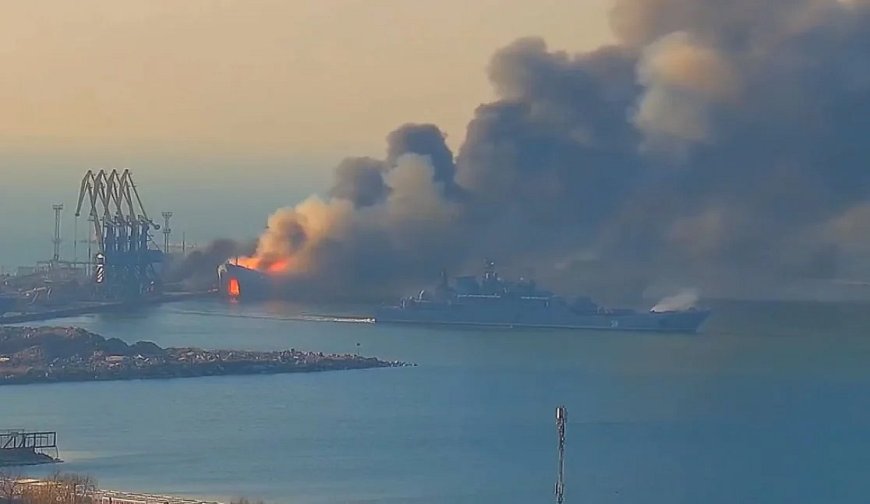
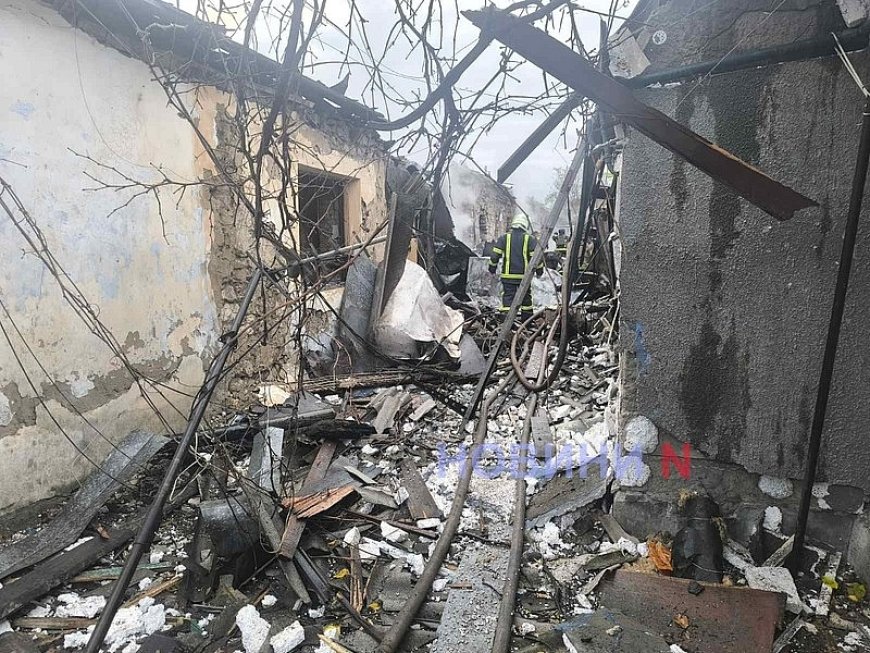
Emergency response teams and municipal workers assess the structural damage to a residential building following a nighttime drone strike, Mykolaiv. (Photo: Agency/Wise News Press)


Extent of infrastructure damage
The sheer scope of the destruction became clearer as dawn approached and regional authorities compiled their preliminary damage assessments. Vitaliy Kim, the head of the Mykolaiv Regional Military Administration, provided a comprehensive breakdown of the affected infrastructure, revealing a strike pattern that indiscriminately impacted both private property and vital public utilities.
According to Kim, the aftermath of the Shahed drone swarm resulted in significant physical trauma to the city's architectural fabric. "As a result of the 'Shahed' attack in the city, there is damage to a multi-story building, several private houses, cars, power lines, and tram tracks," the regional governor reported.
The inclusion of power lines and tram tracks in the casualty list of the city's infrastructure is particularly concerning. The severing of power lines immediately plunges surrounding blocks into darkness, complicating rescue and assessment efforts while depriving residents of heating and communication capabilities. Similarly, the destruction of tram tracks paralyzes a crucial artery of urban mobility, disproportionately affecting working-class citizens who rely heavily on affordable public transportation to navigate the sprawling city.
Municipal response and recovery efforts
In the face of recurring aerial bombardments, the municipal services of Mykolaiv have developed a highly efficient, battle-tested methodology for rapid urban recovery. Following Sienkevych’s announcement, specialized utility crews were deployed alongside first responders to begin the arduous process of stabilizing the affected zones.
The immediate priority for these crews is the securing of compromised residential structures. With countless windows blown out by the concussive shockwaves of the detonating drones, workers rapidly distributed OSB boards and heavy-duty plastic sheeting to seal homes against the elements. Sienkevych emphasized that continuous work was underway and guaranteed that all necessary assistance would be provided to the displaced and affected residents.
Simultaneously, specialized electrical technicians and transit engineers began the dangerous work of assessing the severed power lines and twisted tram rails. Repairing high-voltage lines in the immediate aftermath of an attack involves significant risk, as the structural integrity of the surrounding area is often compromised, and the threat of a secondary, follow-up strike—a tactic frequently employed by Russian forces—remains a constant psychological burden on the repair crews.
The mechanics of Shahed drone warfare
The attack on Mykolaiv serves as a textbook example of the asymmetric warfare tactics currently dominating the southern Ukrainian theater. The Shahed-type drones, originally sourced from Iran and now reportedly manufactured domestically within the Russian Federation, are relatively inexpensive, slow-moving loitering munitions. They rely on GPS guidance to strike pre-programmed static targets with a payload of high explosives.
While conventional air defense systems can easily track and destroy a single drone, the strategic employment of these weapons involves launching them in dense swarms. By saturating the airspace, the attackers aim to overwhelm the processing capacity and ammunition reserves of local air defense batteries. Even when successful interceptions occur, as previously reported in Mykolaiv where a loud explosion signaled the downing of a hostile drone, the resulting kinetic debris poses a lethal threat. The falling wreckage, often consisting of burning aviation fuel and intact explosive warheads, can cause catastrophic secondary damage upon impacting residential roofs or public roadways.
Local utility workers conduct rapid repairs on severed power lines to restore electricity to the affected neighborhoods, Mykolaiv. (Photo: Agency/Wise News Press)
Urban mobility and utility disruptions
The specific targeting, whether intentional or incidental, of Mykolaiv’s tram network and electrical grid highlights a broader strategy of urban degradation. The tram system in Mykolaiv is more than just a mode of transit; it is the circulatory system of the city's daily economy. When tracks are warped or destroyed by explosive blasts, the entire network suffers from cascading delays, forcing municipal authorities to rapidly reroute bus services and creating logistical bottlenecks for citizens attempting to reach their workplaces or access essential services.
Repairing tram infrastructure under wartime conditions is a complex logistical challenge. It requires heavy machinery to remove the damaged steel rails, specialized welding teams to fuse new track segments, and electrical engineers to restore the overhead catenary wires that power the trams. Despite these massive operational hurdles, Ukrainian utility workers have repeatedly demonstrated an extraordinary capacity to restore functionality within days, if not hours, of an attack, turning urban repair into a profound act of civilian defiance.
Mykolaiv's enduring frontline reality
To understand the full gravity of this latest attack, it must be placed within the broader historical context of Mykolaiv's role in the ongoing conflict. Since the onset of the full-scale invasion in 2022, Mykolaiv has served as the unbreakable shield protecting the strategic Black Sea port of Odesa from overland assault. The city has endured relentless artillery barrages, ballistic missile strikes, and unceasing drone swarms.
While authorities expressed immense relief that this specific nighttime raid resulted in no civilian casualties, the psychological toll on the population cannot be quantified. The citizens of Mykolaiv live under the perpetual shadow of the air raid siren. Nocturnal attacks are widely recognized by human rights observers as a deliberate tactic designed to inflict psychological trauma, induce sleep deprivation, and steadily erode the mental resilience of the civilian populace. The fact that residents must repeatedly sweep up the shattered glass of their homes and return to work the next morning is a testament to an endurance born of absolute necessity.
The city's tram network, a vital component of public transportation, suffered disruptions after falling debris damaged the tracks, Mykolaiv. (Photo: Agency/Wise News Press)
Calls for strengthened air defense
The latest assault on Mykolaiv’s civilian infrastructure has reignited urgent conversations regarding the distribution and availability of advanced air defense systems across Ukraine. While the capital city of Kyiv and critical military installations benefit from sophisticated, multi-layered defense umbrellas, regional centers in the south and east frequently rely on mobile fire groups equipped with heavy machine guns and searchlights to intercept incoming drones.
Military analysts and regional leaders continually emphasize that protecting cities like Mykolaiv requires a sustained and increased influx of Western anti-aircraft technology. The economic cost of repairing a multi-story residential building, restoring a municipal power grid, and rebuilding a transit network far exceeds the cost of the interceptor missiles required to neutralize the threat in the sky.
As the sun rises over Mykolaiv, the immediate danger of the night has passed, giving way to the grueling reality of urban recovery. The sound of air raid sirens has been temporarily replaced by the mechanical hum of street sweepers, the grinding of metal saws, and the hammering of plywood over shattered window frames. The city, scarred but resolute, continues to function, proving once again that while infrastructure can be damaged, the civic foundation of the community remains firmly intact.